Embodied AI在工业场景的应用
探索具身智能在工业制造、仓储物流、质量检测等场景的实际应用案例和部署经验。
工业应用 智能制造 仓储物流 质量检测 案例研究
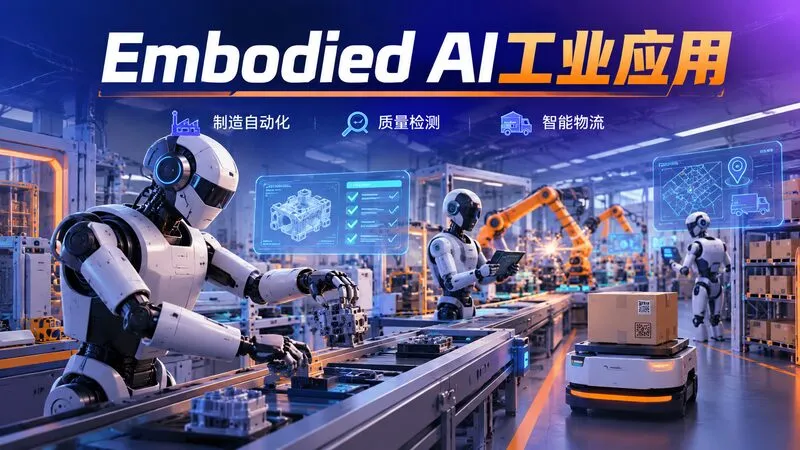
Embodied AI在工业场景的应用
Embodied AI正在改变工业制造的面貌。本文介绍几个典型的工业应用场景,分享实际部署经验。
应用场景概览
| 场景 | 应用 | 技术栈 | 效果 |
|---|---|---|---|
| 柔性装配 | 机械臂装配 | Isaac Sim + RL | 效率提升30% |
| 仓储拣选 | 移动抓取 | VLA + Nav2 | 准确率95% |
| 质量检测 | 视觉检测 | YOLO + 机械臂 | 漏检率<0.1% |
| 物料搬运 | AGV调度 | 多机器人协作 | 成本降低40% |
案例一:柔性装配
场景描述
汽车零配件装配线需要频繁更换产品型号。传统编程方式需要为每种产品编写专门的程序,换型时间长。
Embodied AI解决方案
class FlexibleAssembly:
    def __init__(self):
        self.robot = FrankaRobot()
        self.vision = VisionSystem()
        self.policy = self._load_policy()

    def assemble_product(self, product_type):
        """装配指定产品"""
        # 1. 视觉识别零件
        parts = self.vision.detect_parts()

        # 2. 根据产品类型选择装配策略
        assembly_plan = self._get_assembly_plan(product_type)

        # 3. 执行装配
        for step in assembly_plan:
            part = self._find_part(parts, step['part_id'])
            self._pick_and_place(part, step['target_pose'])

            # 紧固操作
            if step['action'] == 'tighten':
                self._tighten(step['torque'])

    def _load_policy(self):
        """加载训练好的策略"""
        # 使用强化学习训练的装配策略
        from stable_baselines3 import PPO
        return PPO.load("assembly_policy")

    def adapt_to_new_product(self, demonstration_data):
        """适应新产品(少样本学习)"""
        # 使用模仿学习快速适应
        self.policy = self._finetune_policy(demonstration_data)
部署效果
- 换型时间:从2小时降低到15分钟
- 装配精度:±0.1mm
- 适应性:可处理10+种产品变体
案例二:仓储拣选
场景描述
电商仓库需要从数千种商品中快速拣选订单。传统方式依赖人工,效率低且易出错。
Embodied AI解决方案
class WarehousePicking:
    def __init__(self):
        self.mobile_base = MobileBase()
        self.arm = RobotArm()
        self.vla = VLAAgent("openvla/openvla-7b")

    def pick_order(self, order_items):
        """执行订单拣选"""
        for item in order_items:
            # 1. 导航到货架
            shelf_location = self._get_shelf_location(item.sku)
            self.mobile_base.navigate_to(shelf_location)

            # 2. 视觉定位商品
            item_pose = self._locate_item(item)

            # 3. 抓取商品
            self.arm.pick(item_pose)

            # 4. 放置到拣选箱
            self.arm.place_to_bin()

    def _locate_item(self, item):
        """使用VLA定位商品"""
        image = self.vision.capture_image()
        instruction = f"locate the {item.name}"

        pose = self.vla.get_action(instruction, image)
        return pose

    def handle_unstructured_environment(self):
        """处理非结构化环境"""
        # 处理商品摆放不规则的情况
        while True:
            image = self.vision.capture_image()
            clutter_level = self._assess_clutter(image)

            if clutter_level > threshold:
                # 需要整理
                self._reorganize_shelf()
            else:
                break
部署效果
- 拣选速度:600件/小时(人工300件/小时)
- 准确率:99.5%
- 24/7运行:无需休息
案例三:质量检测
场景描述
电子产品外观检测需要检查多种缺陷(划痕、凹陷、色差)。人工检测效率低且主观性强。
Embodied AI解决方案
class QualityInspection:
    def __init__(self):
        self.robot = SCARARobot()
        self.camera = HighResCamera()
        self.detector = DefectDetector()

    def inspect_product(self, product):
        """检测产品缺陷"""
        defects = []

        # 多视角检测
        for view_angle in self._get_view_angles():
            # 移动相机到指定角度
            self.robot.move_camera_to(view_angle)

            # 捕获图像
            image = self.camera.capture()

            # 检测缺陷
            detected = self.detector.detect_defects(image)
            defects.extend(detected)

        # 综合判断
        result = self._aggregate_results(defects)
        return result

    def _aggregate_results(self, defects):
        """汇总检测结果"""
        if not defects:
            return {"pass": True, "defects": []}

        # 统计缺陷类型和严重程度
        defect_summary = {}
        for defect in defects:
            key = defect['type']
            if key not in defect_summary:
                defect_summary[key] = []
            defect_summary[key].append(defect)

        # 判断是否合格
        passed = self._evaluate_pass_criteria(defect_summary)

        return {
            "pass": passed,
            "defects": defect_summary
        }
部署效果
- 检测速度:2秒/件
- 漏检率:<0.1%
- 误检率:<1%
部署经验总结
硬件选型
- 机械臂:Franka(高精度)、UR5(性价比)
- 相机:Intel RealSense(深度)、Basler(工业级)
- 计算:NVIDIA Jetson AGX(边缘)、RTX服务器(训练)
软件架构
┌─────────────────────────────────────┐
│  应用层:任务管理、HMI              │
├─────────────────────────────────────┤
│  AI层:感知、规划、学习             │
├─────────────────────────────────────┤
│  控制层:ROS2、运动控制             │
├─────────────────────────────────────┤
│  硬件层:传感器、执行器             │
└─────────────────────────────────────┘
常见问题
- 光照变化:使用遮光罩、自适应算法
- 振动干扰:隔振平台、软件滤波
- 通信延迟:本地计算、边缘部署
FAQ
工业部署需要多长时间?
典型项目3-6个月,包括需求分析、方案设计、开发测试、现场部署。
投资回报周期多久?
通常12-18个月收回投资,具体取决于应用场景和人工成本。
需要专业AI团队吗?
建议使用成熟的解决方案提供商。自建团队需要3-5人,包括机器人工程师、AI工程师、软件工程师。